
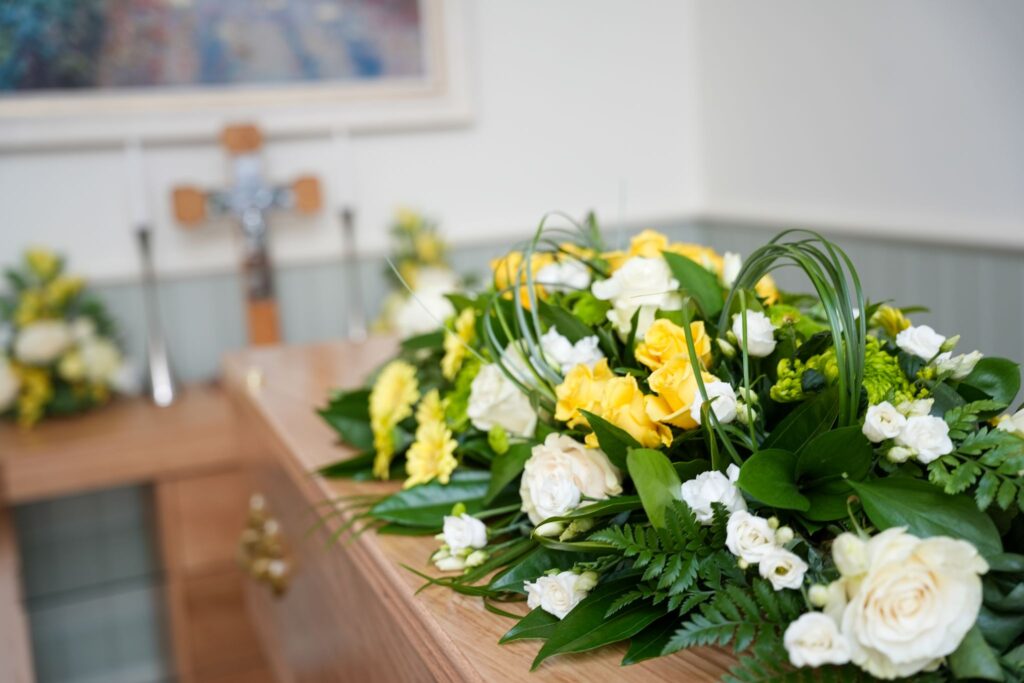
When a loved one passes away, the days and weeks that follow can feel overwhelming. Alongside the natural weight of grief, families in our community are often faced with a series of decisions about how to honour and commemorate the person they have lost.
At Hillier Funeral Service, we find that terms like “funeral”, “wake”, and “viewing” are frequently used during this time, but if you’ve never arranged a funeral before, you may not understand what each one involves.
We’ve written this guide to help explain these terms, so your family can make informed choices, ensuring that the farewell you arrange truly reflects the life that was lived.
What Is a Funeral?
A funeral is the formal ceremony held to mark a person’s death that takes place before the actual burial or cremation. It is the central event in the mourning process and typically takes place within a week or two of the death, though timings in Swindon can vary depending on a number of factors:
- The wishes and religious or cultural traditions of the deceased and their family
- Whether a coroner’s involvement is required before the death can be registered
- The availability of the chosen venue and officiant
- Any travel arrangements needed for family members coming from abroad
Funerals can be held in a wide variety of settings, including:
- Local Churches or Places of Worship: Such as St Sampson’s in Highworth or Christ Church in Old Town.
- Crematorium Chapels: We have both Kingsdown Crematorium and North Wiltshire Crematorium nearby
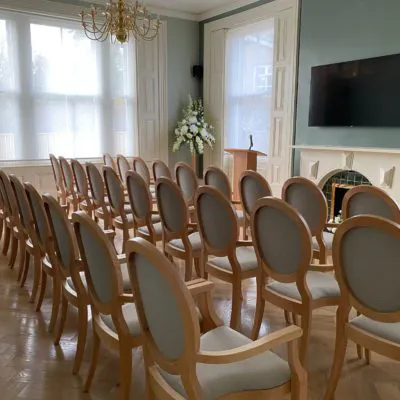
- The Kingshill House Service Room: Our beautifully renovated, intimate setting in Swindon, which provides a warm and dignified atmosphere for up to 40 guests.
- Natural Burial Grounds: Including local meadow or woodland burial settings for a more eco-friendly farewell.
- A Private Home or Outdoor Space: Any location with deep personal significance to your loved one
The tone and content of the service are shaped by the wishes of the deceased and their family. A traditional funeral might include hymns, prayers and readings from scripture, while a non-religious celebration of life might feature personal eulogies, favourite music and moments of shared remembrance.
Funerals conclude with the formal committal of the body, either through burial or cremation.
Understanding the Committal
In the context of a funeral, the “committal” is the final part of the service where we formally say goodbye to the physical presence of the deceased. It is the act of “committing” the body to its final resting place.
- In a burial, the committal usually takes place at the graveside as the coffin is lowered into the ground.
- In a cremation, the committal happens at the crematorium, often signified by the closing of a curtain or the coffin moving out of sight.
This moment marks the formal conclusion of the funeral ceremony and provides a sense of finality that distinguishes it from other gatherings.
What Is a Viewing?
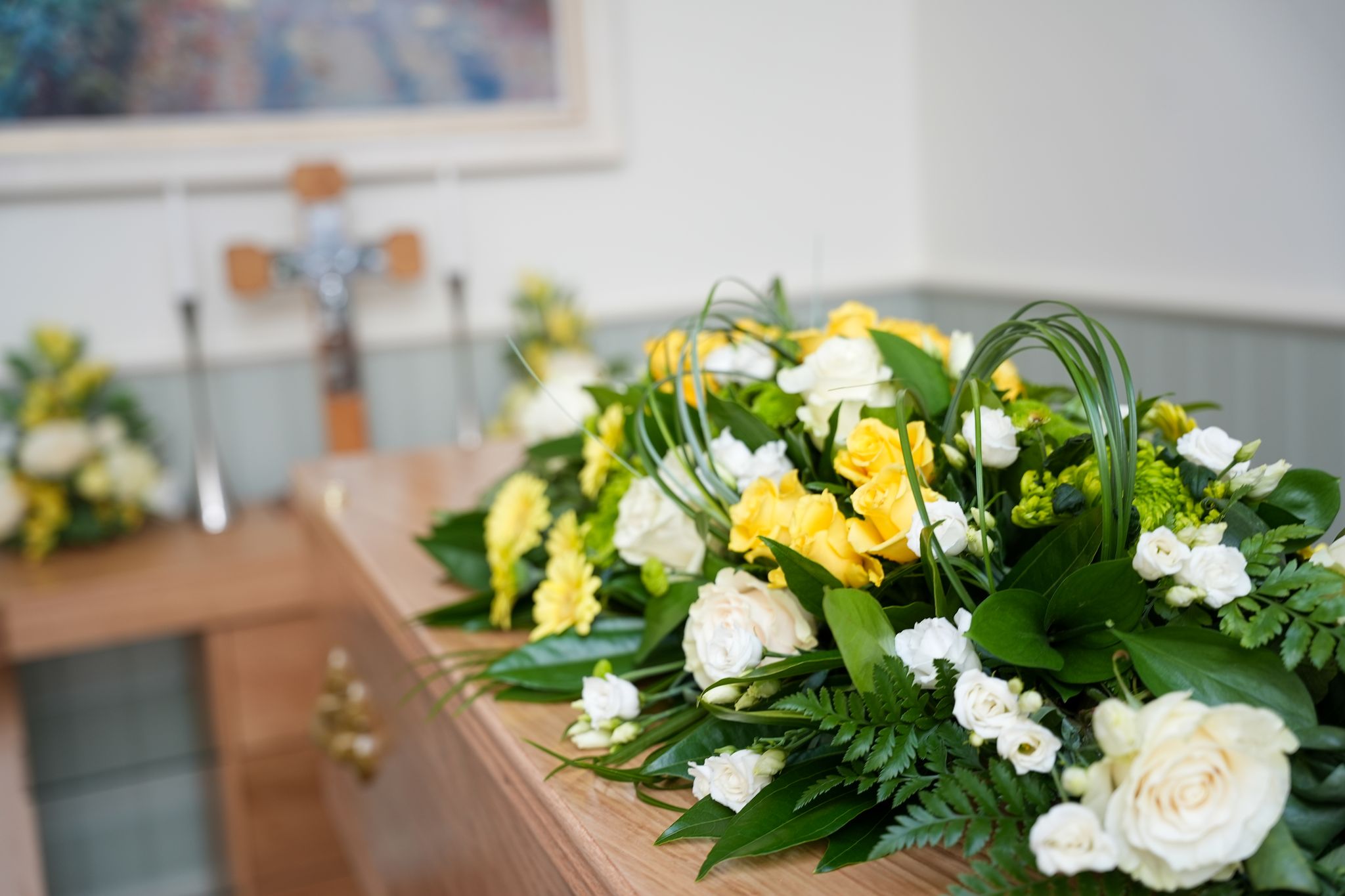
A viewing, sometimes referred to as a visitation, is an opportunity for family members and friends to spend time with the deceased before the funeral takes place.
The deceased is placed into the coffin and laid out in a chapel of rest at the funeral home, where those who wish to pay their respects may do so in a calm and private environment.
All of our funeral homes – in Old Town, Highworth, Rodbourne Cheney, and Royal Wootton Bassett – offer these private spaces.
Viewings are a matter of personal choice. Families considering a viewing often find it helpful to think about the following:
- For some, seeing their loved one one final time provides a sense of peace and a quiet opportunity to say goodbye without the structure of a formal service.
- For others, a viewing may not feel right, and that is entirely valid.
- For certain religious and cultural traditions, a viewing or period of watching over the deceased is an expected and important part of the mourning process.
A viewing is typically a subdued and intimate occasion. Visitors may come alone or with others, sit quietly, pray or simply be present.
Families wishing to arrange a viewing should discuss this with their funeral director as early as possible, as it requires careful preparation of the deceased and thoughtful coordination of visiting times.
What Is a Wake?
A wake is a social gathering held to commemorate the life of someone who has died. It generally follows on after the funeral ceremony and is less formal than the funeral service, providing an opportunity for family and friends to come together, share memories, offer one another comfort and celebrate the person they have lost.
Popular local venues include:
- The Family Home: A private and familiar setting.
- Local Pubs or Restaurants: Such as the Kingsdown Inn, The Crown Inn, The White Hart, The Tawny Owl, The Bolingbroke Arms and The Moonraker.
- Hired Function Rooms: Including local community halls or hotels. We regularly use these local hotels: Blunsdon House Hotel, Stanton House Hotel, The Highworth Hotel and Chiseldon House Hotel.
- Golf Club or Sports Club: These two golf clubs are popular with local families; Wrag Barn Golf Club and Bassett Down Golf Club
- The Wake Room at Kingshill House: A relaxed and elegant space in Swindon that allows you to continue sharing memories without travelling to another venue after a service in our room.
- An outdoor space: A place with personal significance to the deceased
Refreshments are usually served, and the atmosphere, while naturally touched by sadness, is often warm and even celebratory in spirit. Stories are shared, photographs are passed around and the unique character of the person who has died is brought to life through conversation and laughter as well as tears.
The word “wake” has ancient roots. Historically, it referred to the practice of keeping watch over the body of the deceased throughout the night before burial, partly as a practical measure and partly as an act of respect. Today, the term has evolved and in most contemporary contexts simply refers to the post-funeral gathering, though in some Irish and Catholic traditions the more traditional form of the wake, held before the funeral with the body present in the family home, is still observed.
A wake is not a mandatory part of the funeral process. What matters most is that those left behind feel supported and that the occasion reflects the personality and wishes of the person being remembered.
How Do They Fit Together?
It may help to think of these three elements as forming a natural sequence, each serving a different emotional and practical purpose:
- The viewing comes first, if chosen. It offers a private, personal moment of farewell before the formal proceedings begin.
- The funeral follows as the central ceremony, marking the death with dignity, structure and, where appropriate, spiritual significance.
- The wake comes last, providing a space for community, warmth and the informal sharing of grief and memory.
Not every family will choose all three, and there is no obligation to do so. Some opt for a simple funeral with a small gathering afterwards, while others plan a full sequence of events attended by the wider community. Cultural background, religious tradition, personal preference and practical circumstances all play a role in shaping these decisions.
Guidance From Hillier Funeral Service
At Hillier Funeral Service, we understand that navigating these choices during one of the most difficult periods of your life can feel daunting. Our experienced team is here to listen, advise and support you every step of the way.
We can help you with:
- Arranging and preparing a viewing at our chapel of rest in any of our funeral homes
- Arranging a funeral service that reflects the life and wishes of your loved one
- Advising on suitable venues and arrangements for a wake
- Guiding you through every practical and personal decision at your own pace
Every family is different, and every farewell should be too.
Whether you are visiting us in Old Town, Highworth, Rodbourne Cheney, or our new home at Lime Kiln House in Royal Wootton Bassett, we provide the same compassionate care that has defined our service for four generations.
Please do not hesitate to get in touch with us to discuss your needs in confidence. We are here whenever you are ready