Dsc06094 (1)

Funeral vs Memorial: Understanding the Difference and Choosing the Right Farewell

Dsc06094 (1)

The difference between a funeral and a memorial service is simpler than it sounds: at a funeral the coffin is present, and at a memorial service it is not. Everything else, the timing, the venue, the tone and who leads it, follows from that one practical fact. Neither is more respectful than the other, and a growing number of families in the UK now choose to hold both.

In short
  • A funeral takes place with the coffin present, usually within two to three weeks of the death.
  • A memorial service takes place after the burial or cremation has already happened, so it can be held whenever suits your family.
  • Because the coffin is not present, a memorial can be held almost anywhere, which is why the venue choice is so much wider.
  • Holding both is increasingly common: something small and private first, then a fuller gathering later.
  • Direct cremation now accounts for 21% of UK funerals, and it has no service at all, so for those families the memorial is the goodbye.
  • There is no right answer. It depends on your loved one’s wishes and what your family needs.
21%
of UK funerals are now direct cremations, up from 3% in 2019
SunLife Cost of Dying 2026
58%
of funerals are described by the organiser as a celebration of life
SunLife Cost of Dying 2026
£3,828
average cost of a simple attended funeral in the UK
SunLife Cost of Dying 2026
£1,628
average cost of a direct cremation, the lowest priced option
SunLife Cost of Dying 2026

Figures are from the SunLife Cost of Dying Report 2026, the longest running study of funeral costs and choices in the UK. Sources are listed in full at the end of this page.

Why this question comes up far more than it used to

A generation ago the question rarely arose, because almost every funeral was an attended service with the coffin present. That has changed quickly, and the numbers show how quickly.

In 2019, direct cremation accounted for 3% of UK funerals. By 2025 it accounted for 21%. A direct cremation has no service and no mourners present, so families who choose it are not choosing to have no goodbye. They are choosing to hold the goodbye separately, on their own terms, at a time and place of their choosing. That gathering is a memorial.

At the same time, the character of the service itself has shifted.

58% of those who organised a funeral say it was a celebratory affair, compared to 51% the year before. That is a 27% rise since 2017. And 70% of funeral directors say they have seen a rise in the number of these services.

SunLife, Cost of Dying Report 2026. The report tracks how families in the UK arrange and pay for funerals.

This matters for the question you are asking, because the old shorthand no longer holds. People used to say that a funeral was solemn and a memorial was a celebration. Today most funerals are described as celebratory too. The real difference is not tone. It is whether the coffin is present, and everything practical that follows from that.

What a funeral is

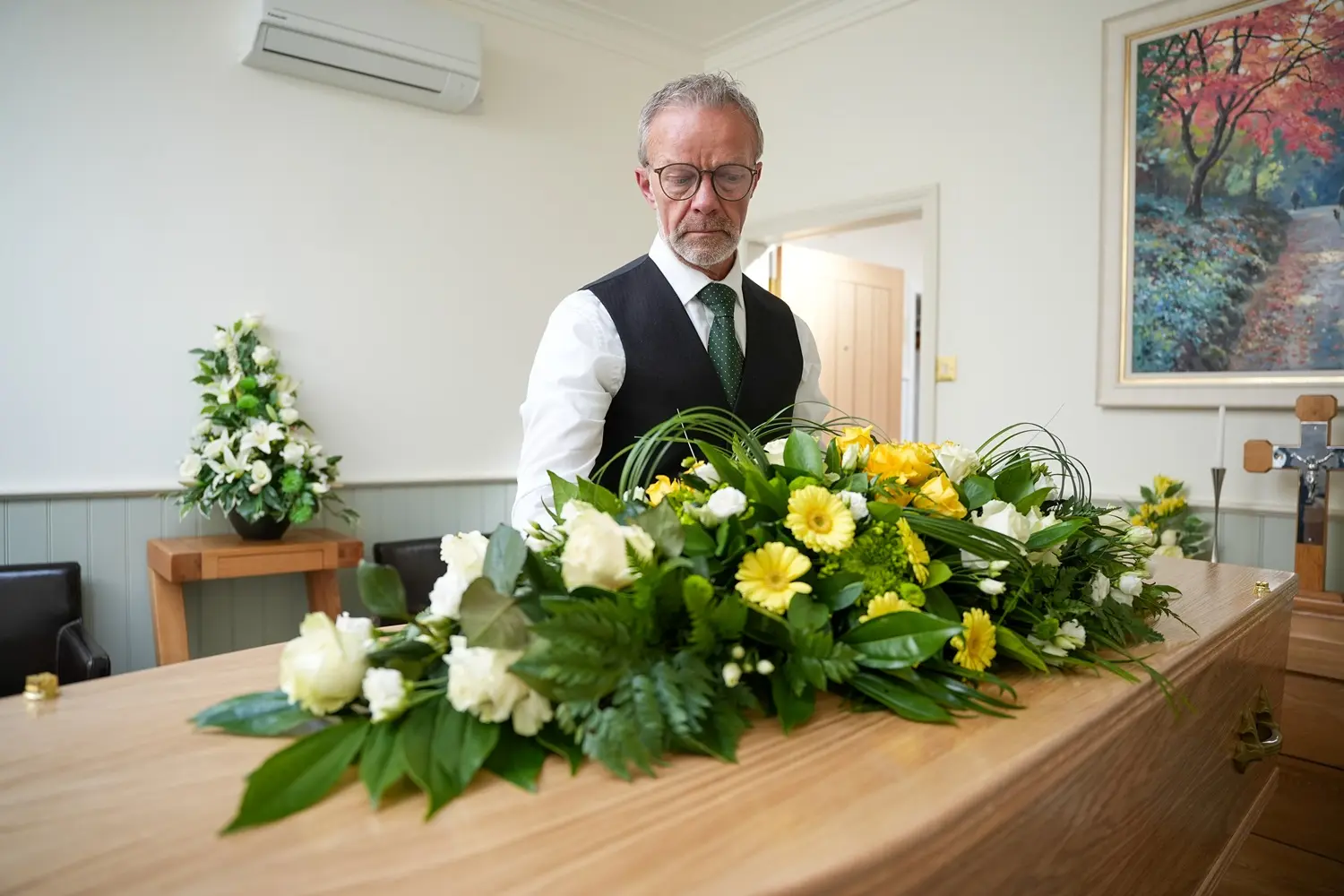
A funeral is the service held with your loved one present, before burial or cremation. It is usually held within two to three weeks of the death, because the timing is tied to the burial or cremation itself.

Where it can be held

Most commonly a church, a crematorium chapel, or a funeral home chapel. Other venues are possible where the landowner gives permission, though the presence of the coffin and the practicalities of the hearse make this less flexible than a memorial.

What usually happens

Services often include readings, eulogies, music and the committal, which is the moment of burial or cremation. A minister, a civil celebrant or a humanist celebrant may lead it, or a family member can.

What people wear

Traditional black is no longer the default. Many families now ask for relaxed dress, or for a particular colour that meant something to the person who died. If you would like to set a dress code, say so on the notice or in the order of service so nobody is left guessing.

iA celebration of life is still a funeral. The phrase describes the tone rather than the format. If the coffin is present, it is a funeral, however joyful the gathering feels. This is worth knowing because families sometimes think they have to choose between the two words, when in fact they can have both the ceremony and the celebratory feel.

What a memorial service is

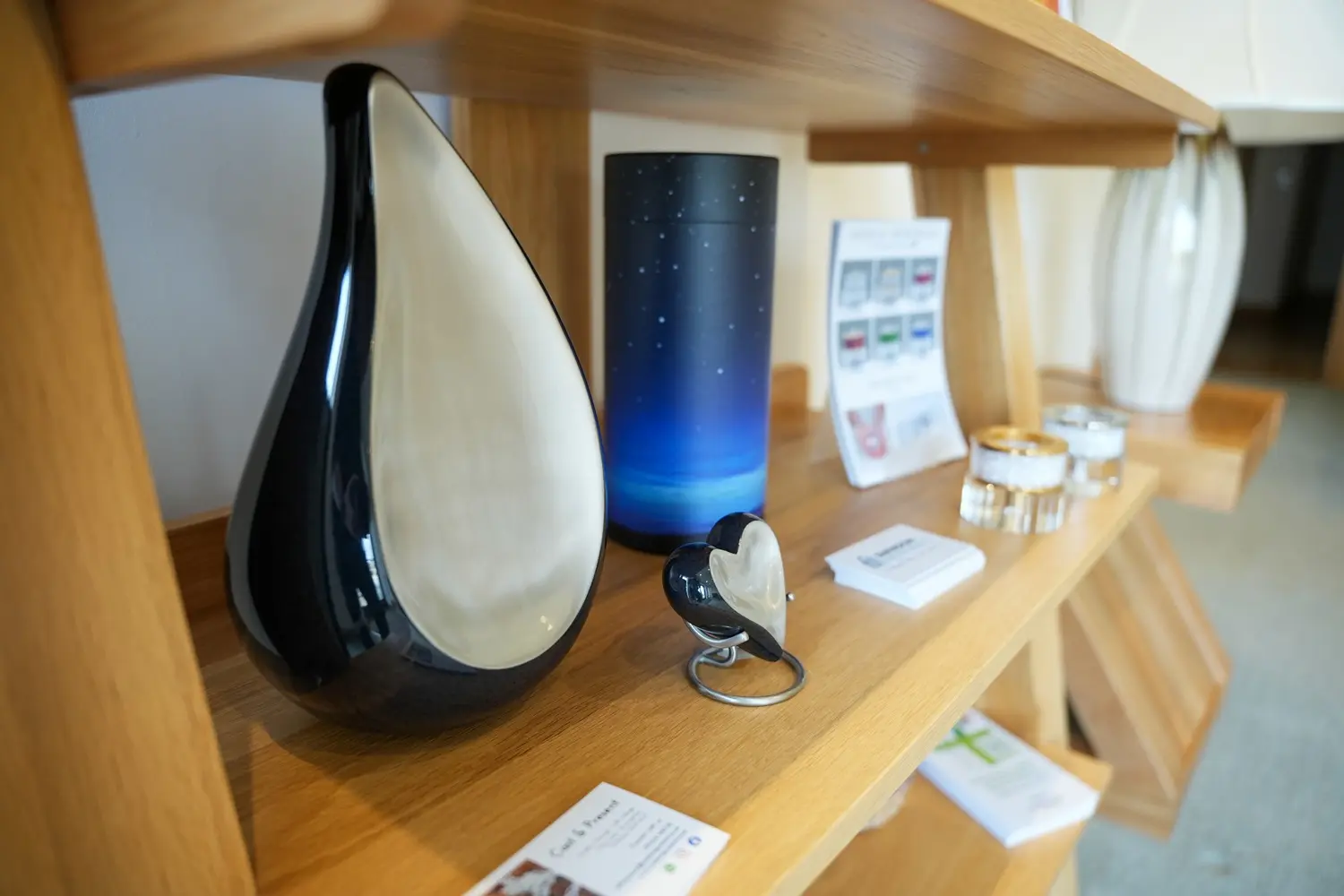
A memorial service is held after the burial or cremation, so your loved one is not present. The ashes may be there in an urn if the family wishes, but there is no coffin and no committal.

Timing is yours to choose

This is the single biggest practical advantage. Because nothing is waiting on the service, it can be held a few weeks later, a few months later, or on a date that carried meaning for the person who died. Families spread across the country or abroad have time to travel, and those who were too unwell or too raw in the first fortnight have time to gather themselves.

Almost anywhere is possible

Without a coffin and hearse to accommodate, the venue opens right up. A village hall, a garden, a favourite pub, a cricket club, a hotel function room, a beach, a woodland. If it meant something to them, it can usually be arranged.

The tone tends to be lighter

Some of the immediate shock has passed by the time a memorial is held, and that changes the room. There is usually more storytelling, more laughter, and more space for people to speak who would not have felt able to at a funeral.

Funeral and memorial compared

FuneralMemorial service
Is the coffin present?Yes, and it is the focal pointNo, though an urn of ashes may be
When it is heldUsually two to three weeks after the deathWhenever suits, from weeks to many months later
Where it is heldChurch, crematorium or chapel, or elsewhere with landowner permissionAlmost anywhere, indoors or outdoors
CommittalIncluded, the burial or cremation itselfAlready taken place
Typical tonePersonal and reflective, increasingly celebratoryInformal, often more relaxed still
DressTraditionally dark, now often relaxed or themedUsually relaxed or themed
Who arranges itYour funeral director, alongside the burial or cremationYour family, with as much or as little help as you would like

Can you have both?

Yes, and for many families it is the most comfortable arrangement of all. A small, private funeral or committal for immediate family in the days after the death, then a larger memorial later for friends, colleagues and the wider community.

The reason it works is that it separates two things that a single service asks you to do at once. The first gathering is for grief, at a point when you may have very little capacity for anything else. The second is for remembering, at a point when you can take some pleasure in it. You do not have to hold yourself together in front of two hundred people during the worst fortnight of your life.

If you are considering this, say so early. It changes what you need from your funeral director in the first week, and it often reduces cost rather than increasing it, because the formal service is smaller. It also means nobody has to make the big decisions about the memorial while they are still numb.

Where ashes fit in

If cremation has taken place, the ashes often become part of the memorial, or the reason for a second gathering later on. There is no rush. Ashes can be held by the funeral director or at home for as long as you need to decide.

  • Scattering. Returning someone to a place that mattered to them, whether a natural burial ground, a hillside, a garden or a stretch of coast. Permission is needed in some places, and we can advise on scattering ashes.
  • Interment. Ashes can be buried in a family grave, a cremation plot or a garden of remembrance, which gives people a fixed place to visit. Many find that matters more than they expected it to.
  • Keepsakes. Some families divide ashes between relatives, or keep a small amount in jewellery or a keepsake urn. Others prefer not to. Both are entirely normal.
  • A living memorial. Planting a tree in loving memory gives you somewhere to return to that changes with the seasons rather than staying still.
iYou do not have to decide now. Whatever you choose about ashes can wait until you are ready, and it can be revisited. Families sometimes hold ashes for a year or more before the right moment presents itself, and there is nothing wrong with that at all.

What makes either service meaningful

The elements that people remember are the same whether the coffin is present or not.

Eulogies and tributes

A specific memory does more than a general tribute. One story that captures how somebody actually was will stay with a room far longer than a summary of their life. It does not have to be delivered by a family member, and it does not have to be delivered without faltering.

Music

Music carries feeling that words cannot reach. It might be a hymn, a piece of classical music, or a song that makes everyone smile because it was so completely theirs. Live music adds something, though a well chosen recording works just as well. We can help with choosing music.

Photographs and film

A slideshow gives people something to gather around before and after the service, and it prompts the conversations that follow. Photo tributes and webcasts also let those who cannot travel take part.

Readings and poems

Inviting several people to read, rather than having one person carry the whole service, turns those present into participants. It also spreads the weight, which matters when everybody is fragile.

Which is right for your family?

There is no correct answer, only the one that fits. These are the questions worth sitting with.

  • Did they say what they wanted? A stated wish, however informally expressed, settles most of this. If they left a funeral plan, it may already be answered.
  • Who needs to be there? If key people are abroad or would struggle to travel at short notice, a memorial gives everyone time.
  • What can you manage right now? This is a fair question to ask yourself. A large service within a fortnight is a lot to carry.
  • Is there a religious tradition to observe? Some faiths have clear expectations about timing and form that will shape the decision.
  • What would feel true to them? Formality suits some people and would have made others laugh. That instinct is usually reliable.
  • What is the budget? Worth naming plainly. Our funeral cost breakdown sets out what you are actually paying for.
You are allowed to change your mind. Families sometimes begin planning one thing and realise partway through that something else would suit better. Tell us. Nothing is fixed until you say it is, and no reasonable funeral director will make you feel awkward for rethinking it.

How we can help

We arrange traditional funerals, celebrations of life and unattended direct cremations followed by a memorial of your own design, and we can talk you through the full range of funeral types without any pressure to choose one over another.

Whichever you choose, our bereavement care service is available to you at no cost, and it continues long after the day itself. You are welcome to visit any of our funeral homes to talk things through before you decide anything.

Common questions

What is the difference between a funeral and a memorial service?

At a funeral the coffin is present and the burial or cremation follows, so it is usually held within two to three weeks of the death. At a memorial service the burial or cremation has already taken place, so there is no coffin, and the service can be held whenever and almost wherever the family chooses. Everything else follows from that single difference.

Is a memorial service less respectful than a funeral?

No. A memorial is simply a different shape of goodbye, and for many families it allows a fuller one, because more people can attend and there has been time to prepare something considered. With 21% of UK funerals now being direct cremations, which have no service at all, memorials have become the main gathering for a great many families.

How long after a death can you hold a memorial service?

There is no limit and no expectation. Some families hold one a few weeks later, others wait for a birthday, an anniversary or a season that meant something. Waiting several months is entirely normal and is often the reason people can attend who otherwise could not.

Can you have a funeral and a memorial service?

Yes, and many families do. A small private funeral or committal for immediate family shortly after the death, then a larger memorial later for everyone else. It separates the grieving from the remembering, which many people find easier than trying to do both at once in front of a full room.

Can you have a memorial service after a direct cremation?

Yes, and this is the most common reason people ask about memorials. A direct cremation takes place with no service and no mourners present, which leaves the family free to arrange whatever kind of gathering they want, at whatever point they are ready.

What do you wear to a memorial service?

Usually something more relaxed than you would wear to a funeral, but check whether the family has asked for anything in particular. Many now request a colour, or clothing connected to a hobby or team the person loved. If nothing has been said, smart and unshowy is always safe.

Where can a memorial service be held?

Almost anywhere. Village and community halls, gardens, pubs, sports clubs, hotels, woodlands and beaches are all used. Because there is no coffin or hearse to accommodate, the practical constraints that apply to a funeral largely fall away.

Does a memorial service cost less than a funeral?

Often, though it depends entirely on what you arrange. The SunLife Cost of Dying Report 2026 puts the average simple attended funeral at £3,828 and a direct cremation at £1,628, with send off extras such as catering, flowers and a wake averaging a further £1,312. A direct cremation followed by a gathering you organise yourself is usually the least expensive route, but cost should be one factor among several rather than the deciding one.

Who leads a memorial service?

Anyone you choose. A civil or humanist celebrant, a minister, a friend, or a family member. Because there is no committal to conduct, memorials are more often led by someone who knew the person well, and that is frequently what makes them memorable.

Sources

  1. SunLife, Cost of Dying Report 2026. Average simple attended funeral £3,828; traditional attended funeral £4,510; direct cremation £1,628; average send off spend £1,312; total average funeral spend £5,140.
  2. SunLife, Cost of Dying Report 2026, funeral types. Attended cremation 53%, burial 26%, direct cremation 21%, with direct cremation rising from 3% in 2019.
  3. SunLife, Cost of Dying Report 2026, trends and traditions. 58% of organisers described the funeral as a celebration of life, against 51% the previous year, a 27% rise since 2017, with 70% of funeral directors reporting an increase in these services.

Talk it through with us

If you are weighing up a funeral, a memorial, or both, we are glad to talk it through with no obligation and no pressure. There is no such thing as a question that is too small.

Contact Hillier Funeral Service
Or call us at any time on 01793 522 797