
Every week, families come to us at Hillier’s – sometimes sitting in one of our funeral homes in Old Town, Highworth, Rodbourne Cheney or Royal Wootton Bassett, sometimes calling us late at night – and they ask the same questions. What exactly is a viewing? What is the committal, and what will actually happen at that moment? Do we need a wake?
These are not simple questions, and there is no shame in not knowing the answers. Most people have never had to arrange a funeral before. The language used around death can feel unfamiliar and, at the worst possible time, that unfamiliarity adds to the weight families are already carrying.
We have been guiding families through these decisions for four generations. This guide is our honest attempt to explain what each element involves – so that whatever you decide, you are deciding freely, with a clear picture of what lies ahead.
The Difference in One Line
- Viewing. A quiet, optional visit to spend time with your loved one in our Chapel of Rest at the funeral home, before the funeral takes place.
- Funeral. The formal ceremony that marks the death and concludes with the burial or cremation.
- Wake. The gathering held after the funeral, where people share food, memories and one another’s company.
The Three Events Compared
| Viewing | Funeral | Wake | |
|---|---|---|---|
| When it happens | In the days before the funeral | One to two weeks after the death, typically | Immediately after the funeral |
| Where it takes place | Chapel of rest at the funeral home | Church, crematorium, Kingshill House, or another chosen venue | Family home, pub, function room, club, or Kingshill House Wake Room |
| Who typically attends | Close family, sometimes close friends | Family, friends, colleagues, community | Anyone invited – usually all those who attended the funeral |
| Is it required? | No – entirely optional | Yes, if a formal ceremony is wanted | No – though many families find it important |
| Is the body present? | Yes – in the coffin in the chapel of rest | Yes, until the committal | No |
Jump to a Section
What Happens at a Viewing
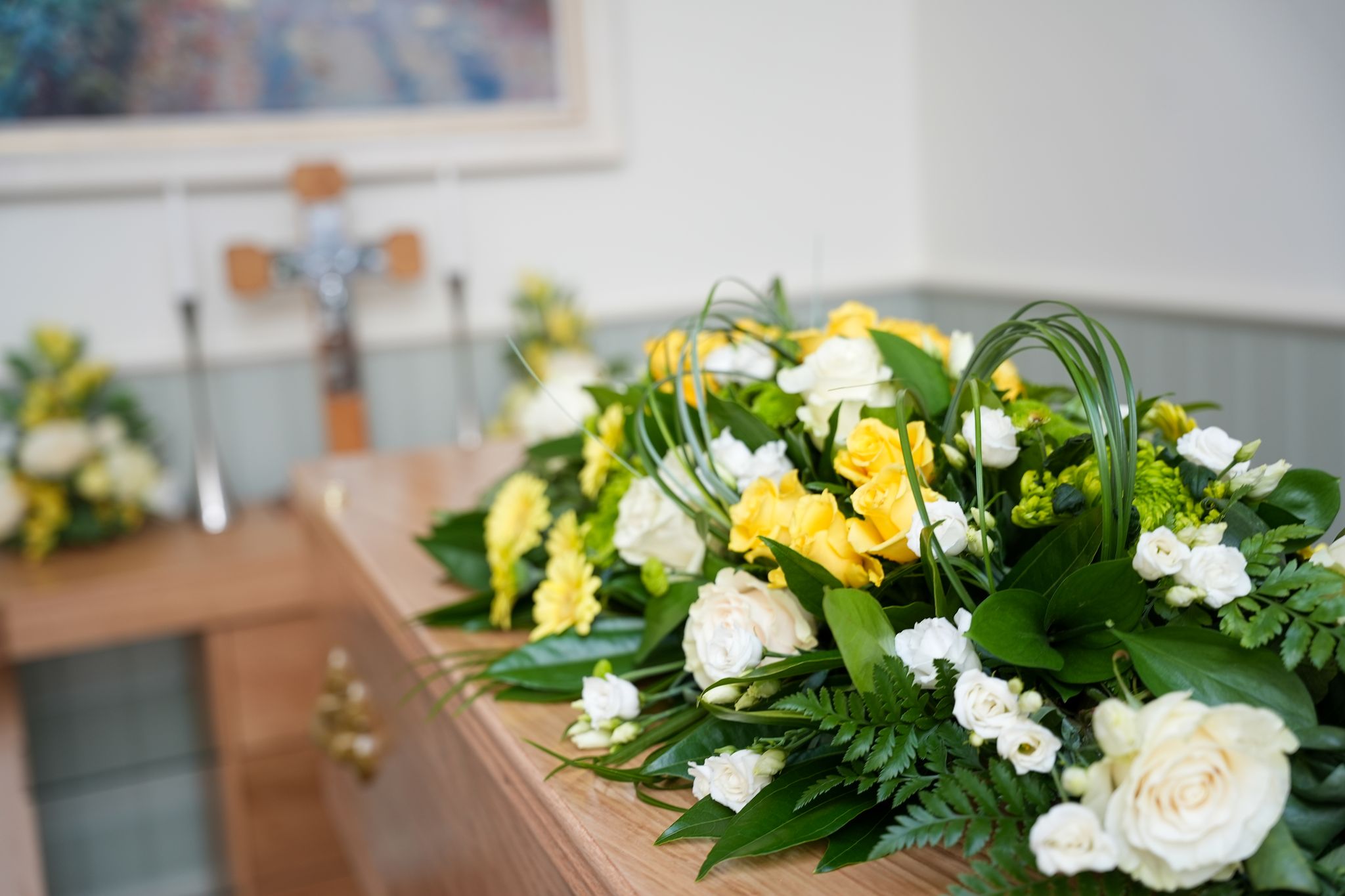
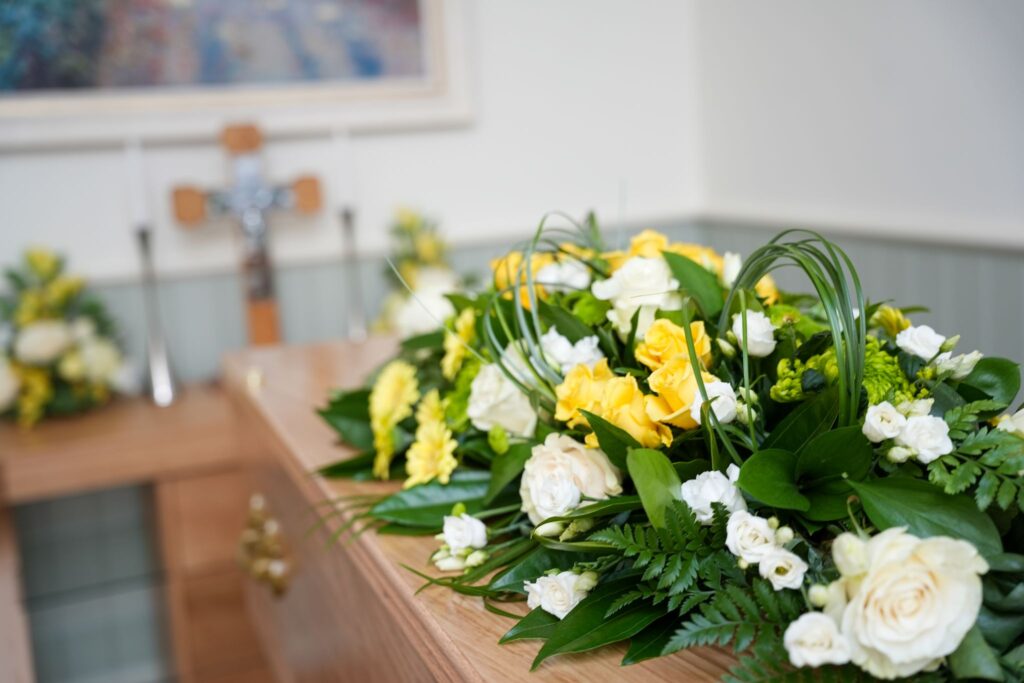
A viewing – sometimes called a visitation or a chapel visit – is an arranged time for family and close friends to spend a while with the person who has died, before the funeral. Your loved one will have been carefully looked after, dressed, and placed in the coffin. They rest in the chapel of rest at one of our funeral homes.
All four of our funeral homes in Old Town Swindon, Highworth, Rodbourne Cheney and Royal Wootton Bassett have private chapel of rest spaces for exactly this purpose. They are calm, unhurried rooms. We keep them that way deliberately.
There is no set format for a viewing. Most visits last somewhere between fifteen and thirty minutes, though there is no clock on this. Some people sit quietly. Some talk to their loved one – telling them things they needed to say, or simply sitting with them one last time. Some pray. Some bring a letter, a photograph or a small keepsake to place in the coffin. Some stand for a moment and leave. All of that is right. None of it is wrong.
Deciding Whether to Attend
This is the part that families worry over most, and it is worth saying plainly: there is no correct answer.
Some people find that seeing their loved one makes the death real in a way that helps them grieve, and that having that private time before the ceremony itself gives them something to hold on to. Others have a clear and peaceful final memory of the person they loved, and choosing not to disturb it is an equally valid and loving choice. Within one family, different people will decide differently – and that is entirely normal. You do not all have to do the same thing.
You can ask us in advance how your loved one looks, and we will answer you honestly. You can bring children with you. You can change your mind right up to the door. You can ask for the coffin to be closed and still sit in the room with them. You can come more than once.
For families with particular religious or cultural traditions – where spending time with the body is an expected part of mourning rather than an optional one – arrangements are usually made quickly and may involve a larger number of visitors over a period of hours or days. If this applies to your family, please tell us early. We will make sure everything is ready.
What Happens at a Funeral
The funeral is the formal ceremony that marks a person’s death. It takes place before or at the point of burial or cremation, and it is the central occasion in the whole process – the moment where family and friends gather, tributes are shared, and the life lived is formally acknowledged.
In England and Wales, the death must be registered within five days of the medical paperwork being confirmed (GOV.UK). The funeral itself usually takes place two to three weeks after the death, though the timing can vary depending on:
- The religious or cultural traditions of your family
- Whether a coroner’s involvement has delayed registration
- The availability of your chosen venue and officiant
- How much time family members need to travel, particularly if travelling from abroad
Where Funerals Are Held in Swindon and the Surrounding Area
The choice of venue shapes the whole atmosphere of the day. Families we work with in Swindon and Wiltshire choose from a wide range:
- Local churches and places of worship – St Sampson’s Church in Highworth, Christ Church in Old Town Swindon, and many others across the area
- Crematorium chapels – Kingsdown Crematorium and North Wiltshire Crematorium both serve families across our area
- Our Kingshill House Service Room – our beautifully restored, intimate venue in Swindon that seats up to 40 guests, providing warmth and dignity away from the crematorium setting
- Natural and woodland burial grounds – for families choosing a more eco-conscious farewell, there are meadow and woodland burial settings within reach of Swindon
- A place with personal meaning – a family home, a favourite outdoor space, or anywhere else that reflects the person who has died, subject to practical arrangements
What the Service Includes
The service is shaped largely by your wishes. A traditional religious funeral follows a familiar order: hymns, prayers, scripture readings, led by a minister. A civil funeral or celebration of life – led by a celebrant – may carry no religious content at all, built instead around a life story, personal tributes, favourite music, and time to simply reflect.
Most services include a welcome, a eulogy or tribute, a piece of music, a moment of quiet, and the committal. Many families now add a photograph slideshow, and we can also arrange a webcast so that relatives who cannot travel are able to watch and feel part of the day.
Burial or Cremation
Cremation has become the most common choice across Britain. The Cremation Society of Great Britain states roughly 80% of all funerals in 2024 were cremation. Many families in Swindon find that cremation gives them more flexibility, giving them the option to keep, scatter or inter the ashes in a meaningful place in their own time.
That said, burial remains the right choice for many families – whether for religious reasons, personal preference, or because having a dedicated place to visit matters to those left behind. We will talk through both options with you without any pressure.
The Committal Explained
The committal is the moment within the funeral service when the body is formally entrusted for burial or cremation. For many families, it is the part they feel most uncertain about in advance. Knowing exactly what will happen tends to remove most of that dread.
At a burial: the coffin is lowered into the grave while words of committal are spoken. Mourners are often invited to scatter a handful of earth, or to lay a flower. The ritual is gentle and deliberate, and there is time to stand quietly before moving away.
At a cremation: this varies depending on the crematorium. At some, a curtain draws slowly around the coffin. At others, the coffin moves out of sight on a catafalque. At others still, nothing moves – the words of committal are spoken with the coffin simply present. You can choose which of these happens, and if the idea of any movement feels too much, you can ask for the coffin to remain still throughout and be moved only after everyone has left.
You can ask us to explain exactly what will happen at whichever venue you have chosen. We will walk you through it before the day, so there are no surprises.
What Happens at a Wake
A wake is the gathering held after the funeral – a chance for people to come together, eat and drink, share stories, comfort one another and, in the truest sense, celebrate the person they have lost.
The word itself has ancient roots. Historically it referred to the keeping of watch over the body overnight before burial. Today, in most contexts, it simply means the post-funeral gathering – though in some Irish and Catholic traditions, the older form of the wake is still observed, with the body present in the family home before the funeral takes place.
A wake is less structured than the funeral. The atmosphere, while naturally touched by sadness, is often warm and, as the afternoon goes on, even celebratory in spirit. Stories come out. Photographs are passed around. The particular character of the person who has died is brought to life through conversation, laughter as well as tears.
Where Wakes Are Held in and Around Swindon
- The family home – private, familiar, and often exactly right
- Local pubs and restaurants – many local families use The Kingsdown Inn, The Crown Inn in Highworth, The White Hart, The Tawny Owl, The Bolingbroke Arms or The Moonraker, each of which can offer private space for a gathering
- Hotels with function rooms – Blunsdon House Hotel, Stanton House Hotel, The Highworth Hotel and Chiseldon House Hotel are all regularly used by families we work with
- Golf clubs and sports clubs – Wrag Barn Golf Club and Bassett Down Golf Club are popular choices, particularly where the person who died was a member
- Community and village halls – across Swindon and Wiltshire, there are many local halls well-suited to a gathering of any size
- The Wake Room at Kingshill House – our relaxed and elegant space, which allows the gathering to flow naturally from the service in our Kingshill House Service Room without any travel in between
- An outdoor space – somewhere that held real meaning for the person being remembered
What You Do Not Have to Do
A wake is not a requirement. Some families hold a simple, private farewell and choose not to gather formally afterwards.
Others hold a direct cremation with no service at all, and arrange a celebration of life memorial event weeks or even months later – when the initial shock has passed and more people can travel. Both are complete and proper farewells.
What matters is not that you follow a particular form, but that those left behind feel held, supported, and given the chance to grieve together in whatever way fits them.
How the Three Fit Together
It helps to think of the three elements as a natural sequence, each with its own distinct purpose:
- The viewing comes first – if you choose it. A private, unhurried farewell in the days before the ceremony.
- The funeral is the centre of the day – the formal ceremony, the tributes, the committal.
- The wake closes it – the return to ordinary human company, to food and conversation and the comfort of being together.
Not every family holds all three, and there is no obligation to. Some arrange a direct cremation with no service at all and hold a memorial gathering weeks later. Some have a funeral and nothing else. Some do all three.
There is no version of this that you can get wrong.
What Each One Costs
We believe families deserve honest, straightforward information about costs – not because we want to reduce a farewell to a budget, but because financial worry adds a real burden to grief, and knowing the figures helps families make confident decisions.
The average cost of a simple attended funeral is now £3,828 (SunLife, Cost of Dying Report 2026). Direct cremation – a practical choice with no formal ceremony at the time – averages £1,628, and now accounts for approximately one in five of all funerals in the UK. It is not a lesser choice. For many families it is the right one, particularly when they want to hold a more personal celebration of life in their own time and place.
The costs beyond the funeral itself – the wake, catering, flowers, the gathering – average a further £1,312 (SunLife, 2026). Taken together the total cost of a simple attended funeral averages around £5,140.
We will always be clear about what is included and what is not – before you commit to anything.
If cost is a concern, please tell us. We have helped many families find an approach that honours their loved one properly within the means available. It is never a difficult conversation for us.
Frequently Asked Questions
What is the difference between a funeral and a wake?
A funeral is the formal ceremony that marks the death. It follows a planned order of service, it ends with the committal – the burial or cremation – and it is the central act of farewell. A wake is the gathering held afterwards, where people come together informally: food is shared, stories are told, and the person is remembered not through ceremony but through conversation. There is no set format for a wake, and that informality is part of what it offers.
Is a viewing the same as a wake?
No. A viewing takes place before the funeral, at the funeral home, with your loved one present in the coffin. It is quiet and private. A wake takes place after the funeral, usually at a completely different venue, and the coffin is not there. They serve different purposes at different points in the farewell process.
Do you have to have a viewing?
No. A viewing is entirely optional, and many families choose not to have one. It is also entirely fine for individual family members to make their own decision – you do not all need to do the same thing. If you are unsure, you can ask us what to expect before you decide. There is no obligation to commit until you are ready.
How long after a death does a funeral take place?
Usually two to three weeks. The death must first be registered – in England and Wales, within five days of the medical certificate being issued (GOV.UK). From there, the timing depends on the availability of the venue and officiant, whether a coroner is involved, and how long family members need to travel. Some religious traditions require burial within 24 to 72 hours of death, in which case we move quickly to make that possible.
Who is invited to a wake?
Normally everyone who attended the funeral. If you would prefer a smaller, more intimate gathering, it is completely fine to invite people privately in advance – there is no rule that says the wake must be open to all. We can help you think through the logistics of either approach.
Can you have a wake without a funeral?
Yes, and this is increasingly common. Direct cremations – where the cremation takes place simply, without a ceremony for mourners to attend at the time – now account for around one in five of all funerals in the UK. Many families then hold a celebration of life, sometimes weeks or months after the direct cremation, perhaps when more people can gather and the first shock of grief has eased. That gathering functions in the same way as a wake: it is a space for people to come together and remember.
What should you wear?
For a viewing, ordinary day-to-day clothing is fine, whatever you feel comfortable in or feels most appropriate to you. For the funeral, follow whatever the family has asked for in the order of service or through word of mouth – increasingly, families request a colour rather than black, or a specific item that held meaning for the person who died. For the wake, the same dress as the funeral is a natural guide, and it is fine to become a little more comfortable as the day goes on.
Can children attend a viewing or a funeral?
Yes. Many bereavement specialists consider it helpful for a child to be included, when they want to go and have been prepared for what they will see and experience. We are experienced at welcoming children to both viewings and funerals, and we are always happy to talk to parents about how to handle the conversation beforehand. Excluding children from grief does not protect them from it – and being part of the farewell, when it feels right, can be genuinely helpful to them.
We Are Here When You Are Ready
At Hillier Funeral Service, we know that reading a guide like this is often the first step – taken quietly, alone, trying to get a picture of what lies ahead before you feel ready to talk to anyone.
When you are ready to talk, we are here. Whether you come to us in Old Town Swindon, Highworth, Rodbourne Cheney or our home at Lime Kiln House in Royal Wootton Bassett, you will be met by the same family team that has served this community for four generations. No pressure. No rush. Just honest guidance, given with care.
You can call us on 01793 522797 or come in and see us. We are here whenever you need us – including at times when you least expect to need us.
Sources
- SunLife, Cost of Dying Report 2025 – average funeral and end-of-life cost figures
- The Cremation Society of Great Britain, Cremation Statistics 2024 – cremation rates across the British Isles
- GOV.UK, Register a death – legal timescales for death registration in England and Wales: gov.uk/register-a-death