
Losing someone close to you is one of life's most difficult experiences, and knowing what needs to be done in the days that follow can feel overwhelming. This guide explains the practical steps to take when someone dies in England, so you can move through them at your own pace.
Our family-run team at Hillier Funeral Service is here to support you at every single stage, just as we have been supporting families across Swindon, Highworth, and Royal Wootton Bassett for generations.

1. If the death happens at home and was expected
If the death was expected and occurred at home in Swindon or the surrounding areas, your first step is to contact the GP surgery or the community medical team who had been caring for them.
- Contact the GP Surgery or community medical team: A doctor or qualified medical professional will need to visit to verify the death before any further arrangements can be made.
- Expected death during the night: If your loved one passes away during the night and it was expected, there is usually no need to rush. You can typically wait until the morning to call the doctor's surgery.
- The Medical Certificate: Once the GP has attended the home and is satisfied with the cause of death, they will issue the Medical Certificate of Cause of Death (MCCD). The surgery will then email this directly to the local Registry Office so you can register the death.
- Bringing them into our care: Once the medical professional has attended and verified the death, you can call Hillier Funeral Service on 01793 522797 at any time of the day or night. Our compassionate team will gently arrange to bring your loved one into the care of your nearest Hillier funeral home - whether that is in Old Town Swindon, Highworth, Rodbourne Cheney, or Royal Wootton Bassett.
2. If the death happens in a care home or hospice
When a loved one passes away in a local care home or hospice, the resident nursing and care staff will immediately take care of the initial practicalities.
- Tell the care home your choice of funeral director: Let the care home hospice know which funeral director you have chosen to save any confusion or delay when death occurs, and if it is to be a burial or cremation. us to bring your loved one into our care.
- The Care Home staff will undertake the initial steps on your behalf: Following the death of your loved one, the care home will contact the appropriate medical professional to verify the death on your behalf.
- No need to rush: There is absolutely no pressure to make immediate decisions. Once the death has been verified by the medical team, you can take all the time you need to say your goodbyes before the care home staff contact us to bring your loved one into our care
- Next steps: The care home or hospice staff will coordinate with the GP surgery to arrange for the Medical Certificate of Cause of Death (MCCD) to be issued, and the surgery will advise you when it is ready.
3. If the death happens in a hospital
If your loved one passes away in a hospital, such as the Great Western Hospital in Swindon, the dedicated hospital staff will guide you through the immediate process.
- The Hospital Bereavement Team: The hospital staff will arrange for a doctor to issue the Medical Certificate of Cause of Death (MCCD). You can contact the Bereavement Services team at the Great Western Hospital directly on 01793 604392 or 01793 604393. They will look after your loved one in the hospital mortuary while you begin to think about funeral arrangements.
- Tell the care hospital your choice of funeral director: It is incredibly helpful to let the hospital bereavement team know early on which funeral director you have chosen (such as Hillier Funeral Service) and whether you are planning a burial or a cremation. This prevents any confusion or delays later on.
4. If the death is sudden or unexpected
If someone dies unexpectedly, suddenly, or if the cause of death is unknown, the immediate steps are slightly different.
- Who to call first: You should immediately telephone 999. The emergency services operator will talk you through exactly what to do and will dispatch the appropriate assistance.
- Involvement of the Coroner: Because the death was sudden or unnatural, the doctor or the police are legally required to refer the matter to the local coroner. The coroner may arrange for a post-mortem examination to establish the precise cause of death, which can sometimes naturally delay the paperwork and the subsequent funeral arrangements. The coroner's office will keep you fully informed and will tell you exactly when and where you can register the death.
Before a death can be formally registered, you will need a Medical Certificate of Cause of Death (MCCD).
When someone dies of a known and natural cause, the doctor who was treating them will normally issue this certificate without delay.
If the passing is sudden, unexpected, or the cause is unknown, the coroner will step in to manage this process, and their office will advise you on how to proceed. If you are ever unsure about the status of a medical certificate, you can always reach out to our team for clear, straightforward advice.
You can read more about this on the Government's guide to coroner services.
In England, a death must be registered within five days at a register office, ideally in the area where the person died.
You will usually need to book an appointment in advance. You can book an appointment at Swindon Register Office by visiting their website or can find your nearest office on the GOV.UK register offices page.
What to bring to the Register Office
When you attend your appointment, the registrar will need some details about the person who has died. It helps to bring the following supporting documents with you if you have them available:
- Birth certificate
- Passport
- NHS medical card
- A recent utility bill with their name and address.
The documents the Registrar will give you
Once the death is registered, the registrar will give you several essential documents:
- Certified Copies of the Death Certificate: One or more certified copies of the death certificate (a small fee applies for each copy, and it is worth obtaining several, as banks and other organisations often ask for an original to close accounts).
- The "Green Form" (Certificate for Burial or Cremation): This is the document that gives legal permission for the funeral to go ahead. You will need to pass this form to us so we can proceed with the funeral arrangements.
- DWP Form: A specific form intended for the Department for Work and Pensions to adjust or stop any state benefits or pensions.
Telling others about a death about a bereavement can feel like a daunting task, but the government's free Tell Us Once service makes this significantly easier.
This free Government service lets you report a death to most government departments in one go, including HM Revenue & Customs, the Department for Work and Pensions, the Passport Office and the DVLA. The registrar will give you a reference number so you can complete this easily online or over the telephone.
Organisations you must contact yourself
The Tell Us Once service does not cover private companies, so you will still need to contact the following organisations directly:
- Banks and building societies
- Insurance providers (life, home, car)
- Utility companies (gas, electricity, water, broadband)
- Landlords or local housing associations
If you were the husband, wife or civil partner of the person who died and you lived together in a council property, the tenancy will usually pass to you, though the rules differ for other family members.
Additionally, if your right to remain in the UK depended on your relationship with the person who has died, you may need to apply for a new visa, and we advise checking the latest GOV.UK guidelines.
You may also be eligible for financial assistance during this time, such as the government’s Bereavement Support Payment. If your spouse or civil partner has passed away or if you are caring for a child whose parents have died. Full details and application steps can be found directly on the GOV.UK Bereavement Support Payment website page.
After someone dies, their money, property and possessions they owned are collectively referred to as their estate.
If you have been named as the executor in the will, you will be responsible for managing and distributing this estate. In many instances, you will need to apply for a legal document known as probate, that grants you the official authority to handle the person’s assets and settle their affairs.
If your loved one passed away without a will, a very similar legal process called letters of administration will apply instead.
For clear, impartial, and practical guidance on how to value an estate, settle outstanding debts, and distribute assets correctly, you can find excellent free resources on the Citizens Advice website.
Because navigating the legalities of an estate can feel incredibly daunting during a time of grief, Hillier Funeral Service works in close partnership with Laurelo, a team of trusted, independent probate specialists. They offer compassionate, professional guidance to help take the weight off your shoulders, whether you need a little advice or full estate administration. To learn how we can support you through this process, please visit our dedicated Probate & Legal Support page.
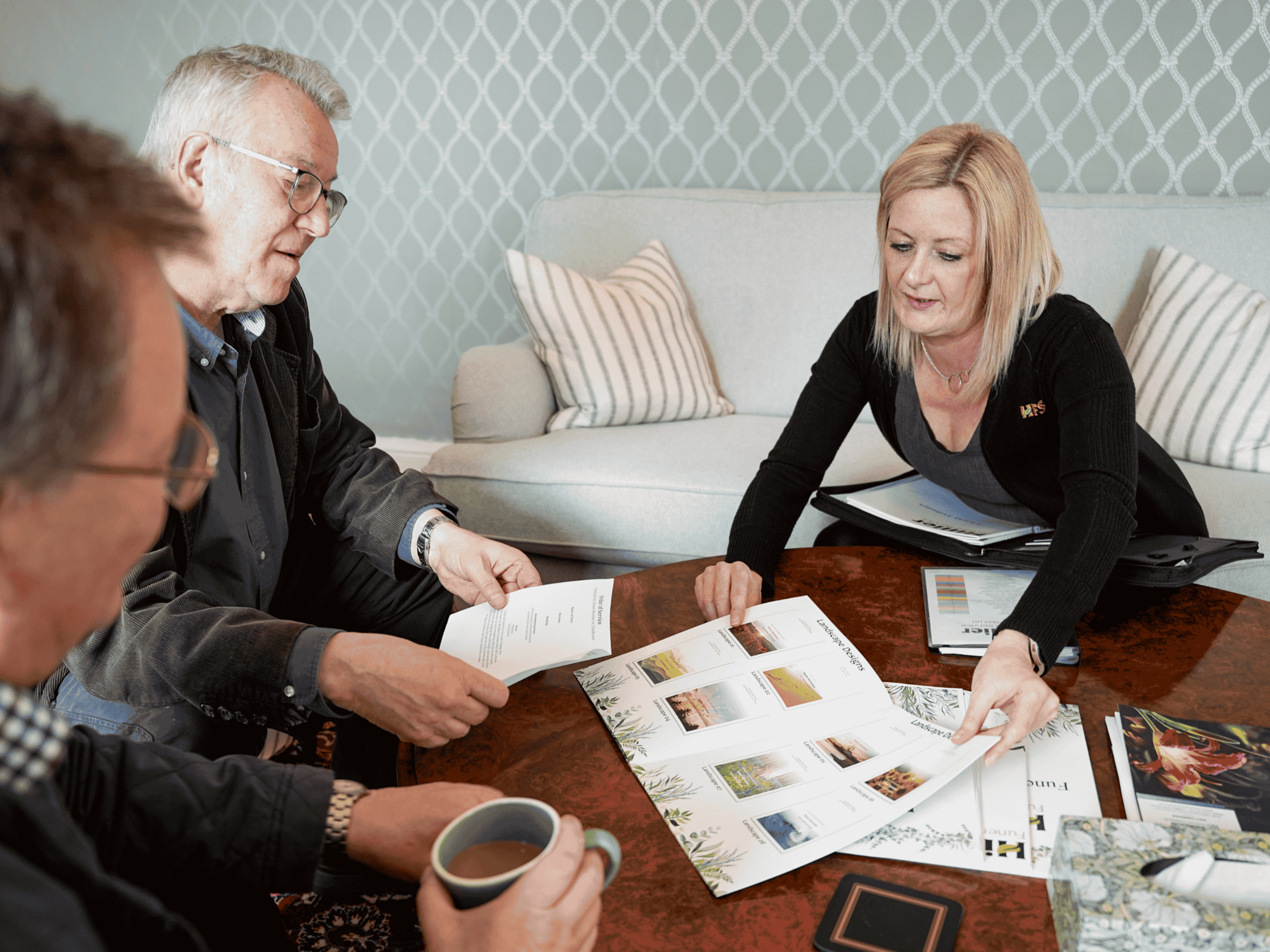
Once you have registered the death and received the Green Form, you can officially begin to plan the funeral service. This is where our family can help your family the most.
At Hillier Funeral Service, we will guide you gently, clearly, and compassionately through every decision. Whether you are choosing between a traditional burial or a cremation, or you are looking to plan a highly personalised service that truly celebrates the unique life of the person you have lost, we are here to listen.
From fully bespoke attended services to simple, respectful options or direct cremations, we take care of all the practical arrangements on your behalf so you can focus on your family.
If the person left a funeral plan or written funeral wishes, do bring these to us, as they will help shape the arrangements as they intended.
There is absolutely no pressure to decide everything at once, and our approach is always completely open, inviting, and unhurried. We are always happy to answer any questions whenever they come up.
To speak directly with a member of our team, please contact us today, and we will arrange a time to meet at whichever of our local funeral homes suits you best: Old Town Swindon, Highworth, Rodbourne Cheney, or Royal Wootton Bassett.
If you have any questions or would like to discuss your options further please give us a call on 01793 522797 or get in touch.